Safety-first hazard evaluation
We look for cracks, decay indicators, weak unions, root heave, and canopy imbalance, and we explain what matters now versus what can be monitored.
Serving San Antonio, Texas & surrounding areas
Get clear, certified guidance on hazardous trees, storm damage, pruning decisions, and removals that need to be done safely and correctly in San Antonio.
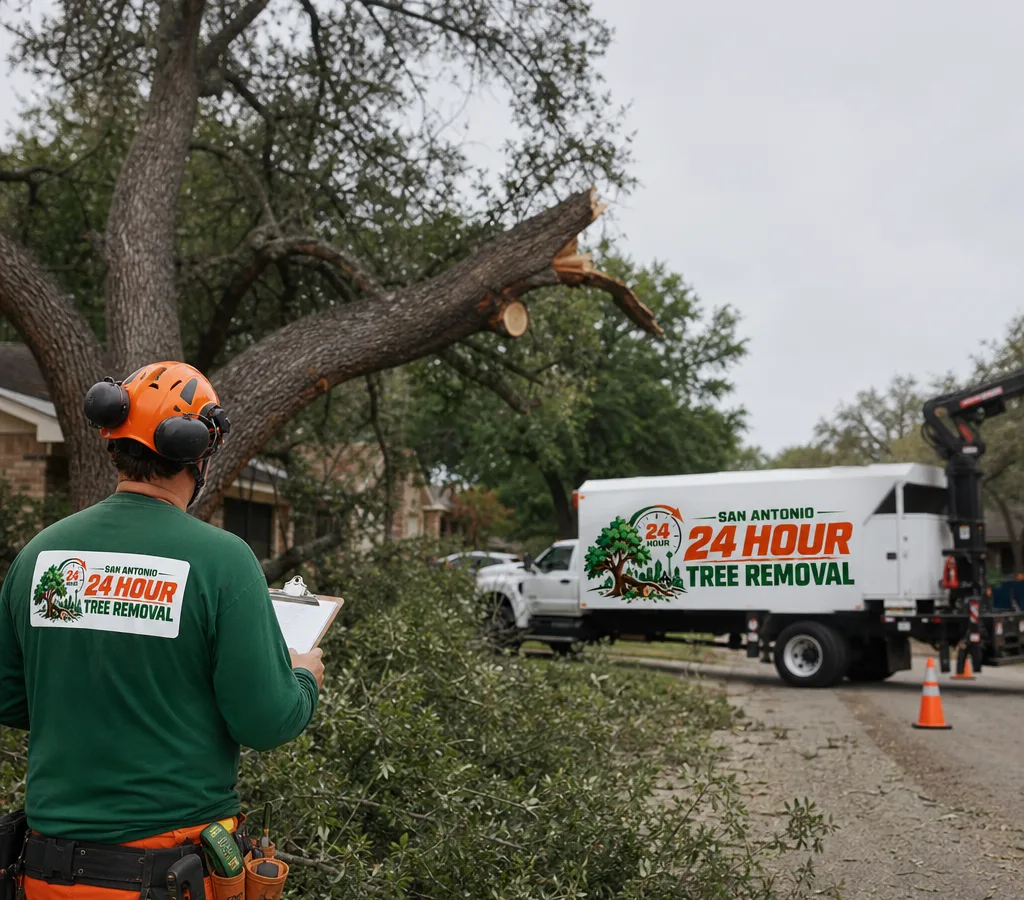
If you are searching for a san antonio city arborist, you usually need more than a quick trim. You need an experienced, certified professional who can look at the whole tree, the targets around it—rooflines, driveways, sidewalks, and power lines—and the site conditions, then recommend the safest next step.
At San Antonio 24 Hour Tree Removal, our arborist-led approach focuses on practical decisions: whether a tree can be retained with pruning or cabling, whether it is a candidate for removal, and what immediate steps reduce risk after storms. In San Antonio, wind events and saturated soil can turn a compromised tree into an urgent hazard, especially with heavy-canopy species like live oak.
You will get a written scope, an explanation you can follow, and a plan that fits the tree, the property, and the timeline you are working under.
Many homeowners start by looking for arborists in San Antonio because they want an informed answer, not a sales pitch. A qualified arborist evaluates tree health, structure, and risk, then recommends the least-invasive option that still meets your safety and property goals.
Common reasons to bring in an arborist in San Antonio TX:
If you already know you need a removal and want a crew that can mobilize quickly, start with our tree removal service in San Antonio and we will route you to the right next step.
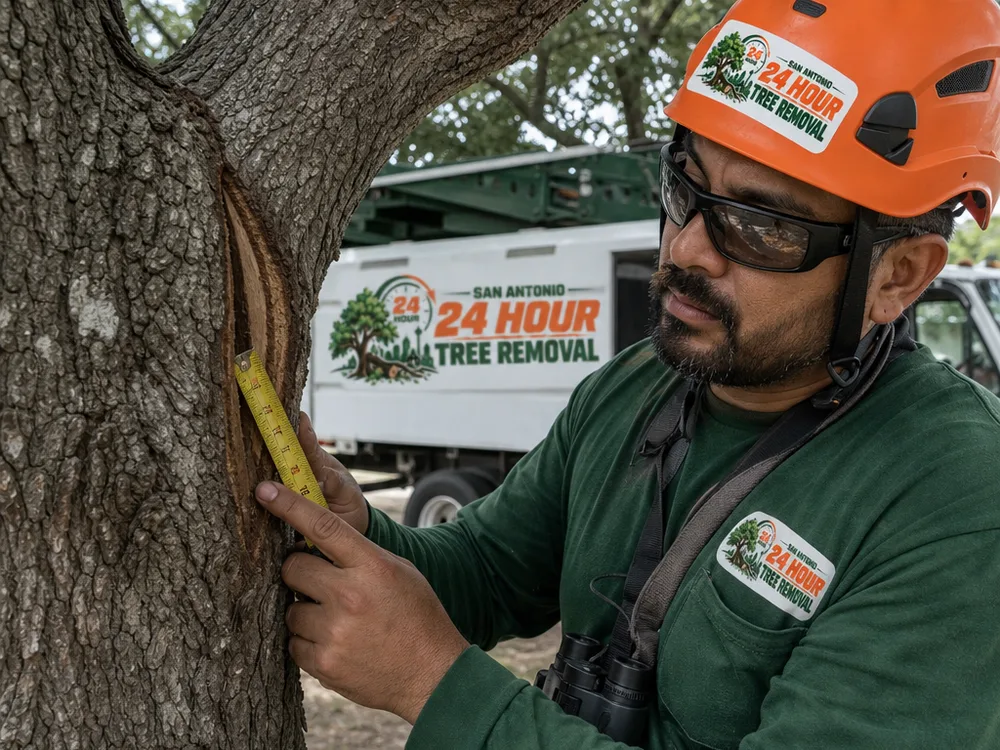
We look for cracks, decay indicators, weak unions, root heave, and canopy imbalance, and we explain what matters now versus what can be monitored.
Sometimes the right answer is selective pruning. Sometimes it is cabling or bracing. Sometimes removal is the only responsible choice. We walk you through the tradeoffs.
Clearances to roofs, fences, and driveways affect both risk and access for equipment. We plan the work so property protection is built into the scope.
After wind and heavy rain, the priority is removing immediate hazards, then making stabilization decisions based on what is actually damaged.
Debris handling, haul-off, and final raking are discussed up front so you know what your yard will look like when the crew leaves.
Tree care decisions often come down to risk and practicality. A good arborist San Antonio homeowners can rely on will separate cosmetic issues from structural problems.
Here are a few of the most common decision points we see locally:
If you are trying to align your plan with professional standards, it is reasonable to ask whether the arborist follows ANSI A300 pruning guidance and current safety practices for rigging and drop zones.
We inspect canopy condition, trunk structure, and the root area, and we note targets like roofs, vehicles, sidewalks, and nearby lines or fences.
You get a straightforward recommendation with options when they exist, such as selective pruning versus reduction, or staged work versus immediate action.
Before cutting starts, we plan access, rigging points, drop zones, and property protection. If the situation requires specialty equipment, that is identified up front.
We complete the work to the agreed scope, then handle brush and wood per the plan so you are not left with a surprise pile at the curb.
Most arborist visits in San Antonio typically range from about $100 to $300 for an on-site assessment, while pruning or removal work priced after the inspection can range widely, often from $300 to $3,000+ depending on size and complexity.
Your final price changes with tree height and canopy spread, hazard level, access for equipment, proximity to structures or lines, the amount of rigging needed, and how much debris is included for haul-off. Exact pricing is confirmed after the on-site inspection and a written scope.
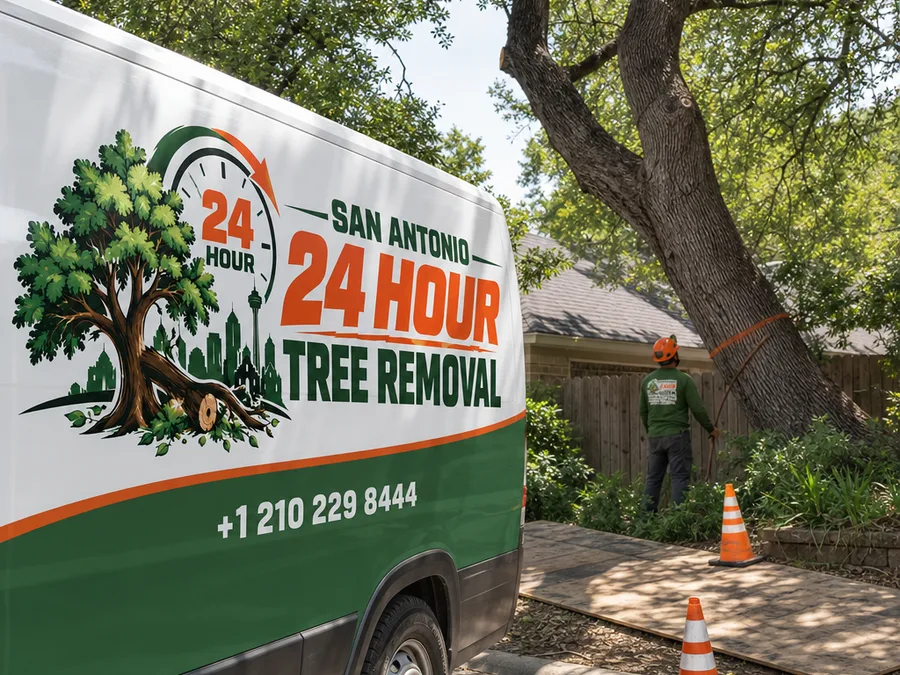
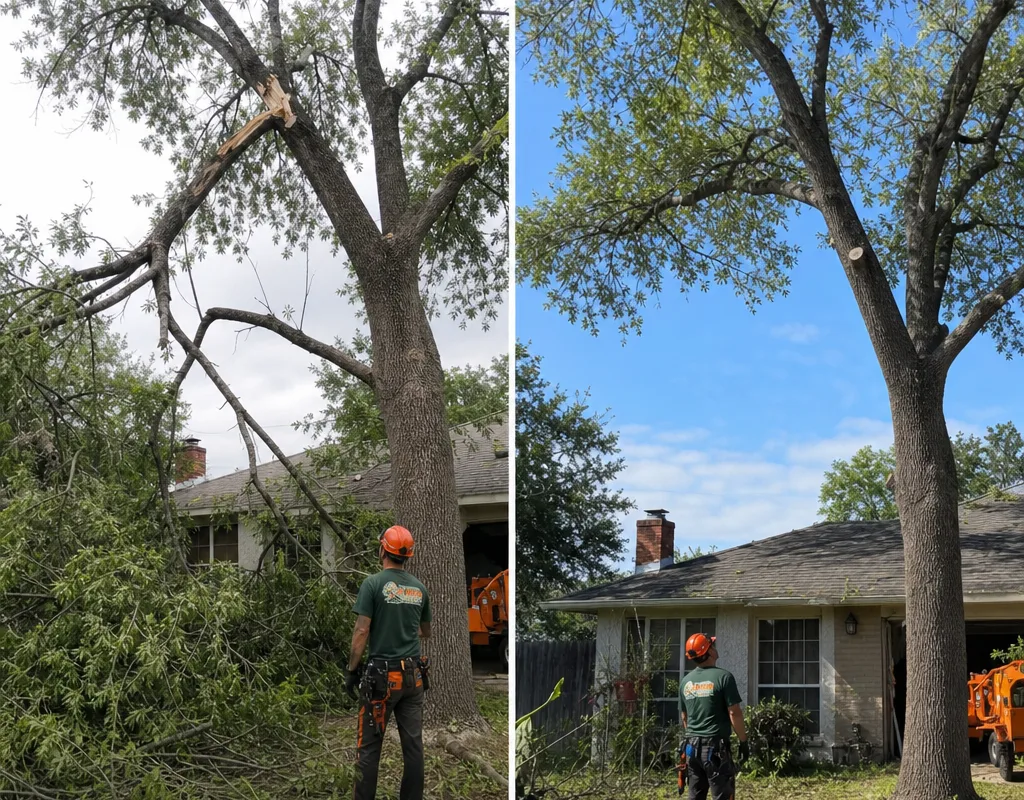
Tell us what you are seeing and where the tree sits on the property. We will schedule an on-site assessment, explain your options clearly, and provide a written scope for the work that makes sense.