Risk and health assessment
We look for defects that change failure risk, including deadwood, cracks, weak unions, root flare issues, decay indicators, and soil heaving. When a tree is stressed, we separate what is cosmetic from what is urgent.
Serving San Antonio, Texas & surrounding areas
Get an on-site assessment, a clear written scope, and safe work practices for pruning, risk reduction, storm response, and removals across San Antonio properties.
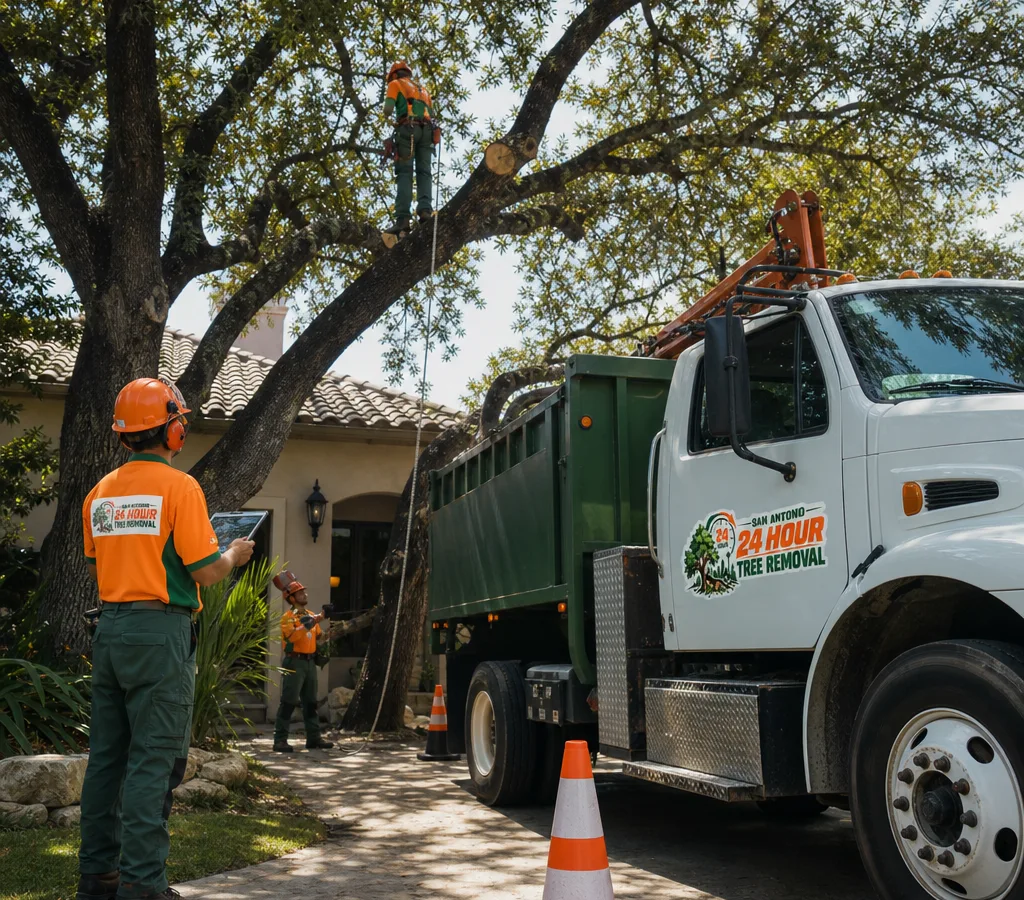
If you are searching for certified tree care San Antonio homeowners and property managers can trust, start by looking for two things: a trained professional who can diagnose tree health and structural risk, and a crew that can carry out the plan safely.
San Antonio 24 Hour Tree Removal provides San Antonio tree care for routine maintenance and urgent situations. That includes hazard evaluations after storms, pruning that follows modern arboriculture standards, and removals when a tree cannot be made safe. You get straightforward recommendations, realistic timelines, and a work plan that protects people, roofs, fences, and nearby landscaping.
For customers who are also comparing removal-only providers, our tree removal service in San Antonio is built around the same approach: inspect first, explain the options, then execute with documented safety and cleanup steps.
We look for defects that change failure risk, including deadwood, cracks, weak unions, root flare issues, decay indicators, and soil heaving. When a tree is stressed, we separate what is cosmetic from what is urgent.
Crown cleaning, crown raising, and selective reduction are used to manage clearance, reduce end-weight, and keep growth balanced. We avoid topping because it creates weak regrowth and future breakage points.
Before storms, we can reduce sail in vulnerable canopies and correct obvious structural issues. After storms, we prioritize clearing hazards first and then address remaining damage with a plan that keeps the tree viable when possible.
When a tree is dead, structurally unsound, or positioned where pruning cannot reduce the risk to an acceptable level, we plan a controlled removal with rigging and a defined drop zone.
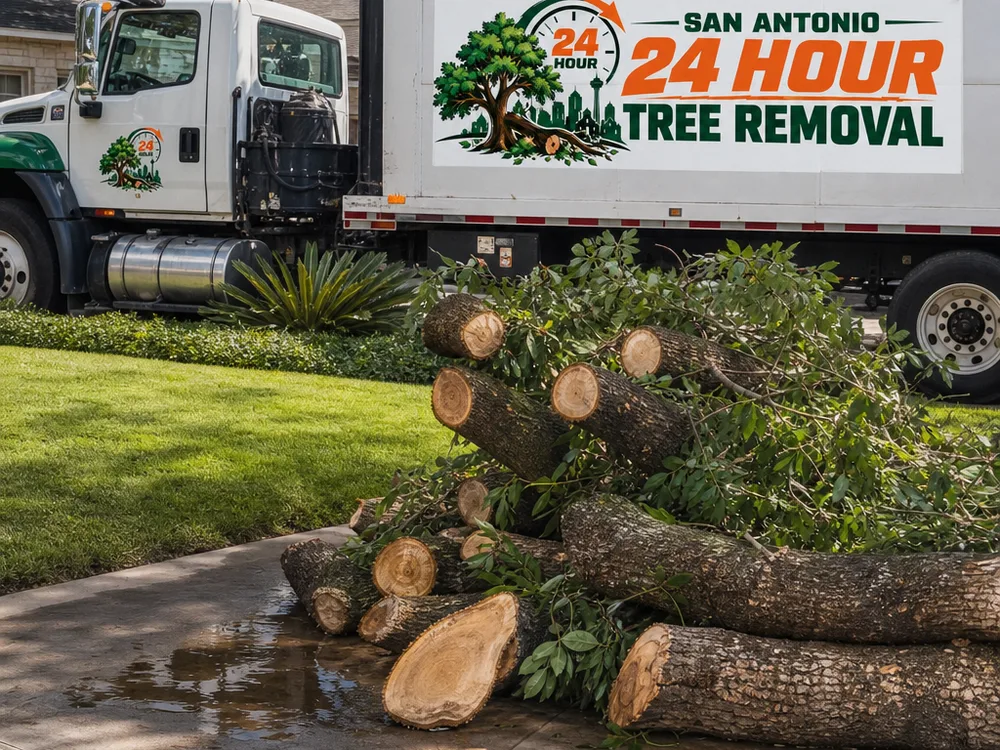
Brush and wood are staged and removed with access and surface protection in mind. Final cleanup includes raking, blowing, and a walk-through so you can see what was done and what to watch next.
Tree care San Antonio clients need is often shaped by heat, wind, and the way properties are laid out.
In older areas with tight lot lines and mature canopies, access can be the biggest constraint. A safe plan may require sectional dismantling, controlled rigging, and extra ground protection to avoid damaging fences and hardscapes.
In neighborhoods with lots of overhead lines, clearance work must be planned carefully. If any limb is in the minimum approach distance of an energized conductor, the right step is coordination with the utility, not improvisation with a pole saw.
After strong wind events, we commonly see hanging limbs, split leaders, and partially failed trees that still look upright from the street. Those are priority hazards because they can shift again with the next gust or a simple vibration.
If you want the benefits of certified care without over-scoping the work, we will explain which cuts are risk-driven, which are clearance-driven, and which are optional aesthetic shaping so you can make a clean decision.
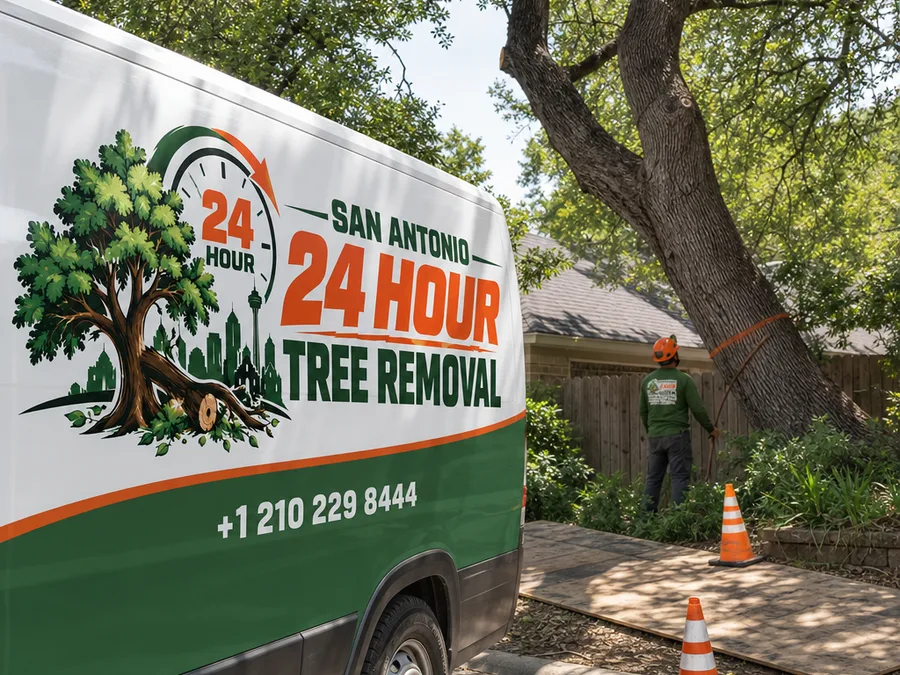
We assess structure, health, targets such as roofs, vehicles, and sidewalks, access, and any obvious constraints like fences or overhead lines. You get a written scope so the work is specific, not vague.
Before cutting, we set a work zone, choose rigging points, and decide how pieces will be lowered or moved. When needed, we use mats or plywood to protect turf and reduce rutting.
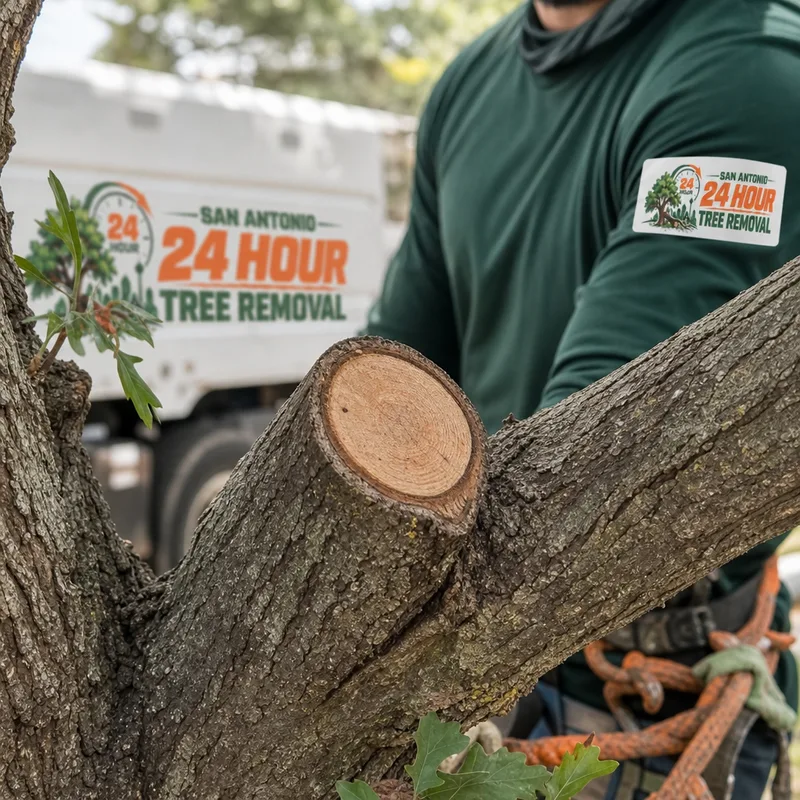
Cuts follow recognized pruning practices with attention to collar cuts, load distribution, and balance. For removals, we dismantle in sections when targets are close and keep the drop zone controlled.
We haul brush and wood, rake and blow the area, and confirm you are satisfied with the clearance and finish. We also point out anything that should be monitored over the next season.
Certified tree care in San Antonio typically ranges from about $250 to $900 for pruning on a single average tree, while larger trees, high canopy work, or complex access commonly run $900 to $2,500+. Hazard removals often start around $700 to $1,500 and can exceed $3,000 when cranes, heavy rigging, or multiple targets are involved.
Final pricing depends on tree size and species, proximity to structures, climbing and rigging complexity, debris volume, and whether work must be staged for utility clearance or limited access. The exact cost is confirmed after an on-site inspection and written scope.
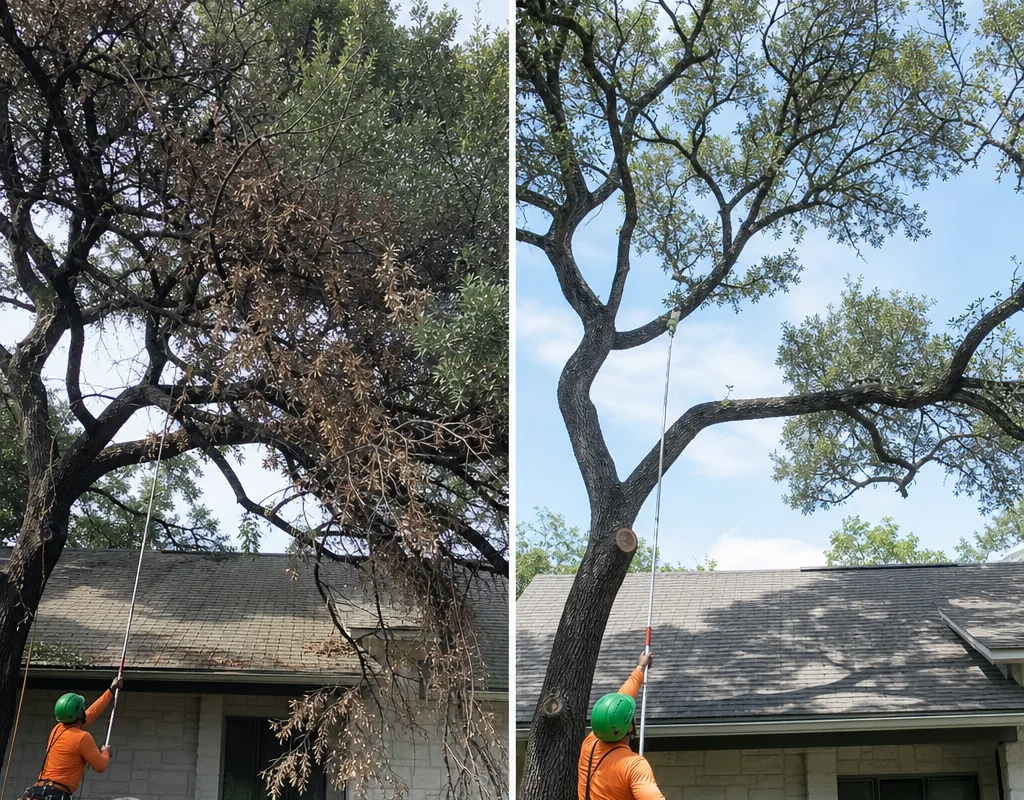
“They walked me through what was actually hazardous versus what was just cosmetic, then pruned the tree away from the roof without leaving it butchered. Cleanup was thorough and the scope matched what was done.”
“After the storm we had a large limb hung up over the driveway. They arrived fast, set a safe work area, and got it down with ropes instead of just cutting and hoping. No damage to the fence or truck.”
Tell us what you are seeing on your property. We will schedule an on-site evaluation, explain the safest options, and provide a written scope for pruning, risk reduction, cleanup, or removal as needed.